Tuesday, 31 August 2010

sixty-two


I found The Voice Project site when a search for live footage of Joanna Newsom led to the above video. I love cover versions, love hearing songs sung in different ways (anyone have any favourites to recommend?) and so couldn't resist clicking through to the website.

The Voice Project is a nonprofit company, set up to support the work of women in Uganda pushing for peace.

For decades, children have been abducted by Joseph Kony's LRA and either forced into soldierhood or used by the group's fighters for sex. Those who escape may fear returning home, fearful of being punished for atrocities they were forced to commit.

Women in Northern Uganda have been banding together to create support groups and networks. And doing this, they sing. The songs travel by radio and word of mouth, with lyrics letting the former soldiers know they are forgiven and should come home.


Aiming to spread the word and support programmes on the ground, The Voice Project ask musicians to cover a song, which they record and place on their website. Money from donations, sponsors and advertisers goes to projects on the ground.


Singing seems basic and universal; as a species, we probably sang before we learned to speak. It can be such a powerful way to communicate. I hope these songs keep being sung.


Monday, 30 August 2010

sixty-one

Animals
Have you forgotten what we were like then
when we were still first rate
and the day came fat with an apple in its mouth

it's no use worrying about Time
but we did have a few tricks up our sleeves
and turned some sharp corners

the whole pasture looked like our meal
we didn't need speedometers
we could manage cocktails out of ice and water

I wouldn't want to be faster
or greener than now if you were with me O you
were the best of all my days

Frank O'Hara

Sunday, 29 August 2010

sixty

There are no words left for us now. Everything I want to tell you - there is so much I want to tell you - is untranslatable, unpalatable: my mouth is incapable of shaping thoughts into words, of pushing them into the air between us.

Where do I go from here? I have been scouring poems, songs, trying to find the one that will let me explain what I am feeling. None work on their own, I want to stitch them together quiltlike - but I think that would render them meaningless. Change them to a hissing stream.

I want to be neat, surgical. I want to be clean as a cut from a sharp knife. I want to lay out my feelings out for you, categorised and labelled, like a cabinet of curiousity.

I am not. I tumble out of myself, the wrong words like slippery organs coughed up.
How does anyone ever speak about important things? How did they learn to craft words from emotion?

Wednesday, 25 August 2010

fifty-nine


I could easily stop speaking and just play Joanna Newsom songs whenever I wanted to express my feelings.


fifty-eight

Last Wednesday I took a day off work to go and look at art. Nearly everyone in the office was away on a summer break, and I was feeling jealous. I took my holiday in June, and it feels very distant.

I went to see Pyschopomps, by the taxidermist Polly Morgan. A pyschopomp is a 'guide of souls' - the deities, spirits or angels responsible for leading souls to the afterlife. They appear in numerous cultures: Charon, Horus, Woden, the Grim Reaper; pyschopomps all. Nowadays, there is Oscar the cat, who lives in a nursing home and curls up with those about to die. His predictions have been so accurate that staff will now alert a patient's family when Oscar appears on a bed. What else could he be, but a pyschopomp?

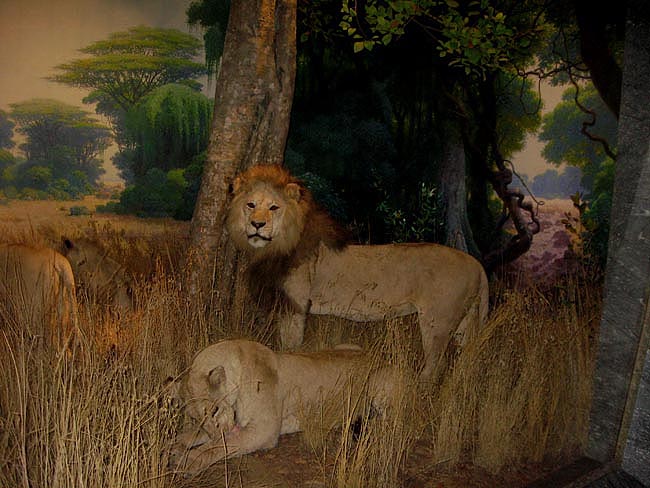
Anyone who has visited a natural history museum will be aware of taxidermy, which recreates an image of life using the skin of a dead animal. Those museum exhibitions, with animals frozen still as if in photographs, posed on backgrounds meant to resemble their natural habitat, are oppositional to Morgan's work: she does not aim to create a fiction of natural life, as if to pretend the animal had not been deconstructed and treated and tanned and manipulated by human hands.


I love this piece. Looking at it gave me an intense feeling of motion sickness. It was not a mass of wings, but one bird circling and swooping; it felt like the bird itself was always moving just out of line of my vision, and all that was left was a flurry of wing. I'm very drawn to static objects that nonetheless seem full of potential and movement; it is so impressive, to be able to make something so energetic despite its physical stillness.

This feeling, of movement without movement itself, was also present in this piece.


The little finches are akin to Eadward Muybridge's work: both he and Morgan capture a series of single moments of movement, and compose them in a way that suggests motion.


I read a review that spoke of escape and transcendence with regard to the second piece: the birds are outside their cage, lifting it beyond this world to another. But they didn't seem free to me. They are not inside the cage, but its metal still reaches up and holds them. They wear it. It put me in mind of how we incorporate animals into our service: we place real birds in cages to lift our spirits with song; we create bird deities to lift our spirits from life to the land of the dead.

Sunday, 22 August 2010

fifty-seven

Some things that are on my body today:


Some sounds that are on my speakers (with an eerie hypnotic homemade video, i love you tube):

fifty-six

We are having (yet another) book-throwing-out session in my house (it never seems to make any difference), so I have been sorting through piles of books, trying to decide what I can make room for on my bookshelf.

I spent this morning flicking through a poetry anthology called 'Favourite Verse', which spans the 16th - 19th centuries (with a couple of 20th century poems dotted about). I haven't read much from the earlier periods, so it will be interesting to learn more about that.

That said, some of my favourite poems were written by John Donne, who died in 1631. He had slipped my mind, and it was nice to stumble across him again.

The Flea

MARK but this flea, and mark in this,
How little that which thou deniest me is ;It suck'd me first, and now sucks thee,
And in this flea our two bloods mingled be.
Thou know'st that this cannot be said
A sin, nor shame, nor loss of maidenhead ;
Yet this enjoys before it woo,And pamper'd swells with one blood made of two ;
And this, alas ! is more than we would do.

O stay, three lives in one flea spare,
Where we almost, yea, more than married are.This flea is you and I, and this
Our marriage bed, and marriage temple is.
Though parents grudge, and you, we're met,
And cloister'd in these living walls of jet.
Though use make you apt to kill me,Let not to that self-murder added be,
And sacrilege, three sins in killing three.

Cruel and sudden, hast thou sincePurpled thy nail in blood of innocence?
Wherein could this flea guilty be,
Except in that drop which it suck'd from thee?
Yet thou triumph'st, and say'st that thou
Find'st not thyself nor me the weaker now.
'Tis true ; then learn how false fears be ;
Just so much honour, when thou yield'st to me,
Will waste, as this flea's death took life from thee.

Donne is funny, playful, clever and kinda irreverent; I imagine straight-laced christians being a tad offended by the references to marriage and the trinity ('three lives in one') in a poem about the narrator trying to persuade his girlfriend to have sex. And making the flea - a parasite, whose bites could resemble the marks of syphilis - holy, a temple? Hah.

An excerpt from the poem. Donne took full advantage of Renaissance typography, using the famous long S to make visual puns (see line three).

I also like the refusal of the woman to be taken in with the narrator's logic: she rebuffs him, squashing the flea with her fingernail - although, the narrator, wiley and desperate as he is, quickly turns this action into another reason for her to agree to sex.

The Flea Catcher, Georges de la Tour

I want to know more about fleas and their erotic associations now. A cursory search of the internet suggested that the flea made numerous appearances in renaissance literature, connected to sex and intimacy - because fleas have freedom to crawl all over our bodies, can bite and suck the flesh those renaissance men cannot touch. A clown in Marlowe's Faustus states, 'if you turn me into anything, let it be in the likeness of a little pretty frisking flea, that I may be here and there and everywhere. O, I'll tickle the pretty wenches' plackets'.

The possibilities the tiny flea held for sexual and romantic expression were not limited to the European Renaissance; I came across this 12th century Chinese folk poem here:

Suchow mattress has nine springs.
Quilt and canopy
cover the mandarin ducks.
The embroidered quilt
wraps him and me.
The flea biting him
bites me, too.